
Scuffed alloy wheels are one of the most common cosmetic issues car owners face. Whether it’s curb rash from parallel parking or minor scratches from road debris, damaged rims can make even a well-maintained vehicle look worn out. The good news? Most scuffed alloy wheels can be repaired at home with the right tools and technique.
In this guide, we’ll walk you through how to fix scuffed alloy wheels safely and effectively — and restore them to a near factory finish.
What Causes Scuffed Alloy Wheels?
Before repairing, it helps to understand the common causes:
-
Curb rash from tight parking spaces
-
Road debris like gravel and stones
-
Corrosion and pitting due to moisture and brake dust
-
Minor dents and surface scratches
If the structural integrity of the wheel is not compromised (no cracks or major bends), cosmetic damage can usually be repaired easily.
Tools & Materials You’ll Need
To properly repair alloy wheel scuffs, you’ll need:
-
Sandpaper (multiple grits)
-
Sanding block
-
Wheel repair filler
-
Plastic scraper
-
Alloy wheel paint (matching color)
-
Gloves
-
Clean cloth
-
Masking tape
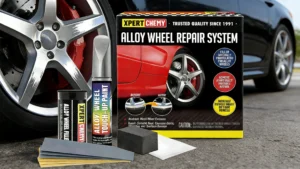
For a complete and convenient solution, we provide Xpertchemy® Alloy Wheel Repair Kit for wholesale supply, which includes everything needed for a professional-quality repair in one box — ideal for retailers, distributors, and automotive businesses.
Step-by-Step: How to Repair Scuffed Alloy Wheels
Step 1: Clean the Damaged Area
Thoroughly wash the wheel to remove dirt, grease, and brake dust. Dry completely before proceeding. Clean surfaces ensure better adhesion for filler and paint.
Step 2: Sand the Scuffed Area
Use coarse sandpaper to smooth out rough edges and remove corrosion. Then switch to finer grit sandpaper to refine the surface.
The goal is to:
-
Remove sharp edges
-
Eliminate oxidation
-
Create a smooth base for filler
If pitting or deeper scratches are present, sanding prepares the surface for filling.
Step 3: Apply Wheel Repair Filler
For deeper curb rash or dents:
-
Mix or prepare the filler according to instructions.
-
Apply evenly using a plastic scraper.
-
Let it cure completely.
Once dry, sand again with fine grit paper until the surface is smooth and level with the surrounding rim.
Step 4: Paint the Repaired Area
Mask off the tire and surrounding areas. Use a matching alloy wheel paint marker or spray.
The Xpertchemy® Alloy Wheel Repair Kit includes high-performance industrial-grade silver wheel paint markers designed to restore the original rim color with precision and durability.
Apply thin, even layers and allow sufficient drying time between coats.
Step 5: Final Inspection & Cure Time
After painting:
-
Let the repair cure fully
-
Avoid washing the car immediately
-
Check for smoothness and color consistency
A properly repaired wheel should blend naturally with the original finish.
Why Use a Dedicated Alloy Wheel Repair Kit?
While DIY methods using generic filler and paint may work, a specialized kit offers better results:
✔ Permanent, long-lasting performance
✔ Heat resistance up to 130°C
✔ Vibration-proof and car-wash resistant
✔ Easy-to-use for DIY repairs
For automotive wholesalers and bulk buyers, we offer Xpertchemy® Alloy Wheel Repair Kit wholesale options, providing a complete, professional-grade solution for customers who want a LIKE NEW wheel appearance without expensive shop visits.
When Should You Seek Professional Help?
DIY repair works well for:
-
Light to moderate curb rash
-
Surface scratches
-
Minor corrosion
However, consult a professional if you notice:
-
Cracks in the wheel
-
Severe bends
-
Air leaks
-
Structural damage
Safety should always come first.
Final Thoughts
Fixing scuffed alloy wheels doesn’t require replacing the entire rim. With proper sanding, filling, and painting, you can restore your wheels to a clean, polished appearance in just a few hours.
Using a complete, high-quality repair kit ensures better durability, color matching, and long-term performance. Whether you’re a car enthusiast, auto shop owner, or distributor, the right tools make all the difference in achieving a professional finish.