
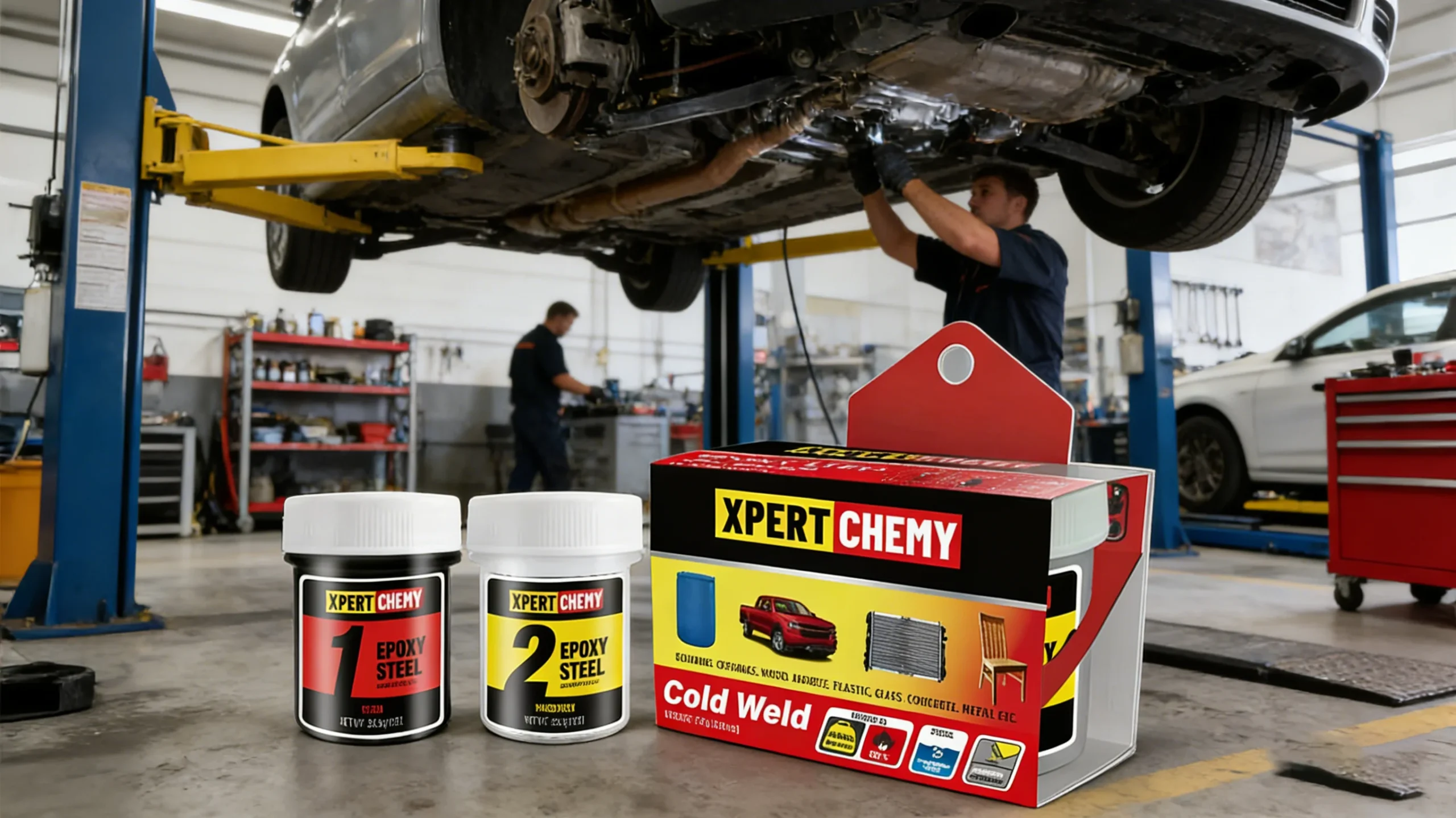
Most cold weld epoxy failures are not caused by weak chemistry. They come from controllable process errors: poor prep, inaccurate mixing, or rushed curing. If your repair cracked, peeled, or turned soft under load, this checklist will help you find the root cause quickly.
Below are the nine failure patterns we see most in maintenance shops, DIY repair, and distributor feedback, with direct fixes you can apply on the next job.
Failure is usually a process problem, not a product problem
Cold weld epoxy can perform well on metal, but it is unforgiving when process discipline is weak. One weak step can ruin the bond line, even when every other step is correct. That is why troubleshooting should start with sequence, not guesswork.
1) Wrong mix ratio
What it looks like: repair stays rubbery, soft spots appear, or cure is inconsistent through the depth.
Why it fails: epoxy systems are stoichiometric. Too much resin or hardener leaves unreacted material.
How to fix: dose by weight or by exact cartridge ratio, not by eye. For two-part liquids, scrape containers to capture full proportion.
2) Incomplete mixing
What it looks like: streaks, random brittle zones, or one side of the repair debonding first.
Why it fails: partially blended resin and hardener create local uncured pockets.
How to fix: mix until color and texture are fully uniform, then continue another 30 to 60 seconds. Pay attention to cup walls and corners where unmixed material hides.
3) Oily or polished surface
What it looks like: clean-looking repair pops off in one piece from metal.
Why it fails: oil film or glossy oxide blocks wetting and mechanical keying.
How to fix: degrease first, then roughen the bonding area with abrasive paper or a burr, and clean again. Final surface should be dry, matte, and dust-free.
4) Surface was cleaned in the wrong order
What it looks like: adhesion varies job to job even with the same product.
Why it fails: if you sand first and then wipe once, abrasive debris and embedded contamination can remain.
How to fix: use a repeatable order: degrease, abrade, degrease again, dry completely, then apply. Consistency removes random failures.
5) Cold substrate and cold ambient temperature
What it looks like: long cure, weak early strength, tapping damage, or premature loading failure.
Why it fails: low temperature slows reaction kinetics and can trap uncured zones.
How to fix: bring parts and material into an acceptable temperature band before application. In winter repairs, pre-warm the part safely and extend cure time.
6) Pot life exceeded before application
What it looks like: poor flow into pores, weak edge bond, rapid thickening during spread.
Why it fails: once epoxy passes workable viscosity, it cannot wet the substrate properly.
How to fix: mix smaller batches, stage tools in advance, and discard material that starts to thicken noticeably.
7) Applied too thick in one pass
What it looks like: surface hardens but interior remains green, or shrink stress causes microcracks.
Why it fails: thick sections can trap heat and cure unevenly, especially in confined cavities.
How to fix: build deep repairs in controlled layers where the system allows, letting each layer reach the recommended stage before adding the next.
8) Machined or loaded too early
What it looks like: threads tear out, drill edges chip, or bond line shears under first use.
Why it fails: handling hardness is not full mechanical cure.
How to fix: separate three milestones in your workflow: safe-to-drill, safe-to-tap, and safe-for-service load. For high stress joints, wait for full cure.
9) Wrong product choice for environment
What it looks like: repair passes bench test but fails in fuel, hot coolant, vibration, or thermal cycling.
Why it fails: not all epoxy systems have the same chemical resistance, temperature tolerance, or flexibility.
How to fix: match product capability to service environment before purchase. Verify with TDS/SDS and request media compatibility data for your exact fluid and temperature range.
Rapid pre-application checklist (2 minutes)
- Correct ratio confirmed
- Uniform mix with no streaks
- Surface degreased, roughened, and re-cleaned
- Part temperature within recommended range
- Batch still within workable pot life
- Cure plan defined before drilling, tapping, or load
What to document when a failure happens
If you are a distributor, workshop manager, or quality team, ask technicians to record:
- Ambient and substrate temperature
- Surface prep method and solvent used
- Exact mix method and timing
- Cure time before machining or service
- Fluid exposure and temperature in service
This turns “random failure” into actionable process control and dramatically improves repeat success.
How this helps B2B conversion and repeat orders
Customers buying cold weld epoxy in bulk care about consistency more than marketing claims. The suppliers that win long-term contracts are the ones that provide clear application guidance, not just product labels.
For XPERTCHEMY® Cold Welding Epoxy Grey programs, many buyers request usage cards, cure guidance by temperature, and troubleshooting sheets for technicians. Providing those assets lowers complaint rates and increases reorder confidence.
Bottom line
If your repair failed, start with process diagnosis before blaming the product. In most cases, correcting ratio control, surface preparation, and cure discipline prevents repeat failure. Cold weld epoxy rewards clean, repeatable workflow.
To reduce repeat failures in real jobs, see our cold weld epoxy for surface-prep-sensitive repairs used in workshop repair workflows.