Removing paint from a car—whether it’s old, peeling, overspray, or just unwanted—can be a tricky task. Choosing the best method depends on how much paint you need to remove, the condition of the underlying surface, and whether you want a DIY solution or something more professional. Below, we break down the most effective approaches for safely stripping paint from automotive surfaces.
1. Start with the Mildest Methods First
If you’re dealing with fresh paint overspray or minor spots, start with the least aggressive approaches:
-
Soap and water — For wet or very recent paint, a thorough wash with warm water and car soap can sometimes remove the material without any harsh chemicals.
-
Clay bar treatment — A detailing clay bar removes small droplets and light overspray without damaging the clear coat, especially when properly lubricated.
These gentle techniques are ideal before moving to stronger solutions.
2. Chemical Paint Removers: Strong and Effective
For larger areas or cured paint, chemical paint strippers are often the most efficient option:
-
Automotive-safe paint removers are designed to dissolve paint without eating into metal or fiberglass. Always choose a product formulated for cars and follow safety instructions carefully.
-
Apply with a brush or foam applicator, let the solution soften the paint, then use a plastic scraper to lift it away gently.
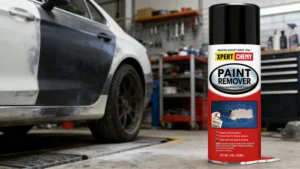
For a reliable chemical solution that balances power with surface protection, many professionals trust XPERTCHEMY® Paint Remover for thorough paint stripping with minimal risk of surface damage.
⚠️ Avoid household paint thinners, acetone, or solvents not recommended for automotive use—they can damage the clear coat or trim.
3. Mechanical Methods: Sanding and Tools
When paint is well bonded or you need a bare metal finish, mechanical removal may be necessary:
-
Sanding — Using an electric sander with coarse grit (e.g., ~220 grit) will remove paint quickly, then progressively finer grits can smooth the surface.
-
Needle gun or rotary tools — Air-powered tools like a needle scaler can chip paint off metal surfaces, especially if rust is present.
-
Media blasting — For professional restorations, blasting with soda, plastic beads, or similar media strips paint quickly and evenly, but it requires specialized equipment and skill.
Always work in a well-ventilated area, wear protective gear, and use broad strokes to avoid warping or overheating metal surfaces.
4. Heat Guns for Small Areas
Heat guns can warm and soften paint so it’s easier to scrape off, making them useful for trim pieces or small sections.
⚠️ Heat must be applied carefully to avoid burning the metal or underlying primer.
5. Final Cleanup and Surface Prep
Once the paint is removed:
-
Remove residue with a suitable cleaner.
-
Smooth the surface with fine grit sandpaper if repainting.
-
Avoid harsh scrubbing, which can harm the bare metal or remaining clear coat.
Conclusion
There’s no one-size-fits-all answer to removing paint from a car—the best method depends on how old or bonded the paint is, the size of the area, and your comfort with tools or chemicals. Start with gentle methods and only progress to stronger techniques when necessary. For effective chemical stripping that’s strong but surface-safe, using a dedicated automotive paint remover like XPERTCHEMY® Paint Remover can make the job easier and more predictable. With the right approach, you can remove unwanted paint safely and prepare your car for its next finish.