
The Question Behind the Question
When people ask, “How long should I wait before turning water back on?”, they usually mean: “How do I avoid a leak, callback, or embarrassing failure after I leave the site?” That is the right question. CPVC solvent cement does not work like ordinary glue. It briefly softens pipe and fitting surfaces, then allows them to fuse. The joint needs time to gain handling strength first, and pressure-bearing strength later.
The practical answer is not one universal number. It depends on temperature, pipe size, fit condition, and whether the joint area was clean and dry before assembly. A joint that survives at room temperature with a small diameter may fail early under cold conditions or larger pipe diameters if you rush pressurization.
Set Time vs Cure Time
Installers often mix these up:
- Set time: when the joint is stable enough that it will not pull apart under light handling.
- Cure time: when the solvent-welded area has developed enough strength for service pressure and regular operation.
You can usually move on to nearby work during set time, but you should not assume the system is ready for full pressure. Treat cure time as the safety margin that prevents costly rework.
What Changes the Waiting Time Most
- Ambient temperature: lower temperatures slow solvent evaporation and polymer fusion.
- Pipe size: larger diameters generally need more cure time because solvent distribution and evaporation behavior are different.
- Moisture and contamination: wet surfaces, oil, or dust reduce weld quality and can delay or weaken cure.
- Cement body and formula: heavy-bodied and medium-bodied products behave differently in gap-filling and set profile.
- Jobsite pressure expectations: low-pressure domestic lines are different from aggressive pressure testing routines.
A Conservative Restart Workflow That Works
If you need a field-safe routine rather than guessing:
- Make sure pipe ends are square, deburred, and dry before cementing.
- Apply cement evenly and assemble immediately with a slight twist.
- Hold the joint briefly so push-out does not open the socket.
- Allow initial set before stressing the line mechanically.
- Wait for adequate cure based on real site temperature and pipe size.
- Reintroduce water gradually, then inspect every new joint visually.
This approach is slower than “turn it on and hope,” but it is dramatically faster than a second service visit.
When You Should Wait Longer Than Planned
- Cold mornings and shaded mechanical rooms
- Oversized or tight-fit joints that required higher insertion effort
- Any joint assembled where residual water was present
- Critical locations behind walls, above finished ceilings, or above electrical assets
If a failure would be expensive or hard to access later, add extra cure time now. Extra waiting is cheap insurance.
Material Choice Matters Too
Reliable timing starts with reliable chemistry. A low-VOC, heavy-bodied CPVC cement designed for hot and cold water service gives more predictable handling on job sites where conditions are not perfect.
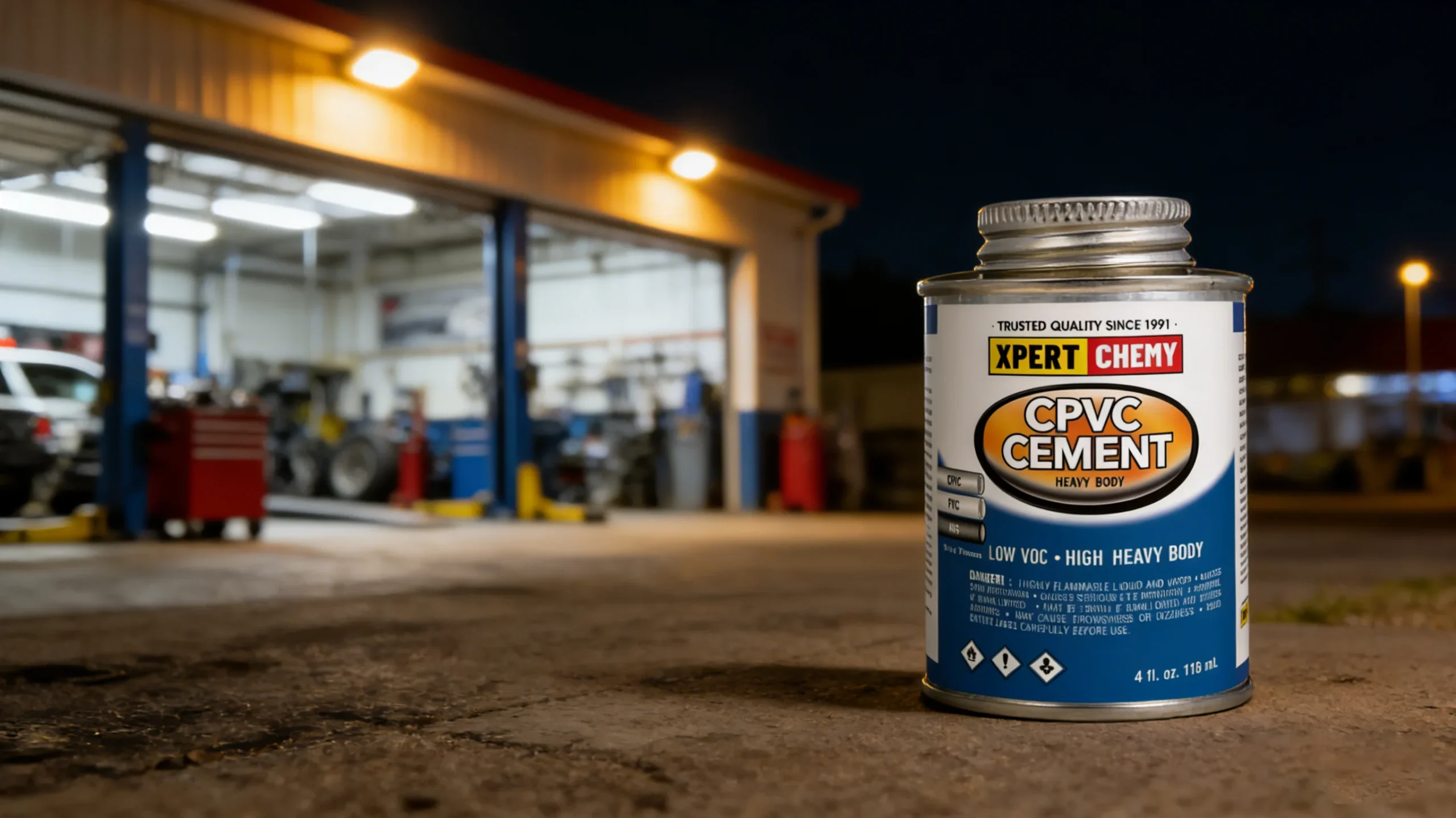
For contractors, resellers, or importers who buy in volume, Xpertchemy Heavy Bodied CPVC Cement 118ml is available for wholesale supply and private-label discussions. If your team needs consistent batches for repeat projects, you can request a wholesale quote directly.
Bottom Line
Do not treat CPVC cure time as a fixed sticker number. Treat it as a jobsite decision based on temperature, size, and risk exposure. If you wait long enough for true cure, not just initial set, your system startup is smoother, cleaner, and far less likely to fail after handover.