
Carnauba wax, often hailed as the “queen of waxes,” is a prized natural product derived from the leaves of the Brazilian Copernicia cerifera palm. Its reputation for delivering a deep, glass-like shine and a warm feel is unmatched. However, its most frequently asked question remains: how long does carnauba wax last on a car? The answer is not a single number. Durability is a dynamic interplay between the wax’s natural properties, application quality, and, most critically, the local climate. This article provides a realistic, climate-based breakdown of carnauba wax longevity for car owners, detailing studios, and wholesale buyers, moving beyond marketing hype to practical, real-world expectations.
The Core Truth: Carnauba is a Natural, Sacrificial Coating
Unlike synthetic sealants or ceramic coatings, pure carnauba wax is an organic substance. Its strength lies in hydrophobicity (water beading) and gloss, not in forming a thick, chemically bonded film. It sits on top of the paint and gradually wears away through physical and environmental abrasion. Therefore, its lifespan is measured in weeks, not months. A commonly cited industry range is 4 to 8 weeks under average conditions, but this varies dramatically with climate. Understanding your specific environment is key to setting accurate maintenance schedules for yourself or your clients.
How Climate Dictates Carnauba Wax Longevity
Climate is the single most significant variable affecting wax wear. Here’s a breakdown of real-world performance in different conditions.
Hot, Sunny, and Arid Climates (e.g., Phoenix, AZ; Dubai)
- Primary Attackers: Intense ultraviolet (UV) radiation and extreme heat.
- Mechanism: UV rays break down the organic polymer chains in the wax, causing it to become brittle and flake off (a process called photo-oxidation). High temperatures can soften the wax, making it more susceptible to being wiped away by towels and dust.
- Typical Longevity: 3 to 6 weeks. The constant sun accelerates degradation faster than any other factor.
- Maintenance Tip: Park in shade or a garage whenever possible. Use a UV-protectant spray on exterior plastics to complement the wax. Reapplication is needed more frequently here than anywhere else.
Humid and Rainy Climates (e.g., Southeast US, UK, coastal Japan)
- Primary Attackers: Frequent rainfall, high humidity, airborne pollutants, and acid rain.
- Mechanism: Water itself doesn’t instantly strip wax, but constant wetting and drying cycles create a mild abrasive action. More importantly, water carries and deposits pollutants, tree sap, and industrial fallout onto the surface. These contaminants bond to the wax layer and, during washing, can grind it away. Acid rain can also chemically etch the wax.
- Typical Longevity: 4 to 7 weeks. The “wet-dry-wash” cycle is the main wear factor.
- Maintenance Tip: A proper, grit-free two-bucket wash method is non-negotiable. Consider a quick detailer spray between washes to boost water beading and remove light contaminants without full washing.
Cold Climates with Road Salt (e.g., Midwest US, Canada, Northern Europe)
- Primary Attackers: Road salt, sand, and gritty snow/slush.
- Mechanism: This is the most abrasive environment. Salt and sand are essentially fine abrasives. When they adhere to the car and are then brushed off or washed, they sandblast the wax layer away. Salt is also hygroscopic, meaning it pulls moisture, promoting corrosion underneath the wax.
- Typical Longevity: 2 to 5 weeks. Wax life can be cut in half compared to a moderate climate during peak winter.
- Maintenance Tip: Rinse the undercarriage and wheel wells thoroughly and frequently during winter months. Avoid automated car washes with brushes. A dedicated winter sealant under the wax can provide a sacrificial layer against brine.
Moderate, Temperate Climates (e.g., Mediterranean, coastal California)
- Primary Attackers: Occasional rain, mild sun, general environmental fallout.
- Mechanism: Wear is primarily from regular washing and general airborne grime. UV exposure is lower, and abrasive contaminants are minimal.
- Typical Longevity: 6 to 10 weeks. This is the ideal scenario for maximizing carnauba wax life.
- Maintenance Tip: Stick to a gentle washing routine. This climate allows for the most predictable and extended wax intervals.
Comparison Table: Carnauba Wax Longevity by Climate
| Climate Type | Average Realistic Longevity | Key Accelerators of Wear | Essential Maintenance Advice |
|---|---|---|---|
| Hot & Sunny | 3 – 6 weeks | UV degradation, heat softening | Park in shade; use UV protectants; reapply monthly. |
| Humid & Rainy | 4 – 7 weeks | Water cycles, pollutant bonding, acid rain | Meticulous two-bucket wash; use quick detailers. |
| Cold & Salty | 2 – 5 weeks | Abrasive salt/sand, corrosion | Frequent thorough rinses; avoid brush car washes. |
| Moderate | 6 – 10 weeks | General washing, fallout | Consistent gentle washing; standard reapplication schedule. |
Maximizing Every Drop: Application & Maintenance Best Practices
Climate
Supplier Note
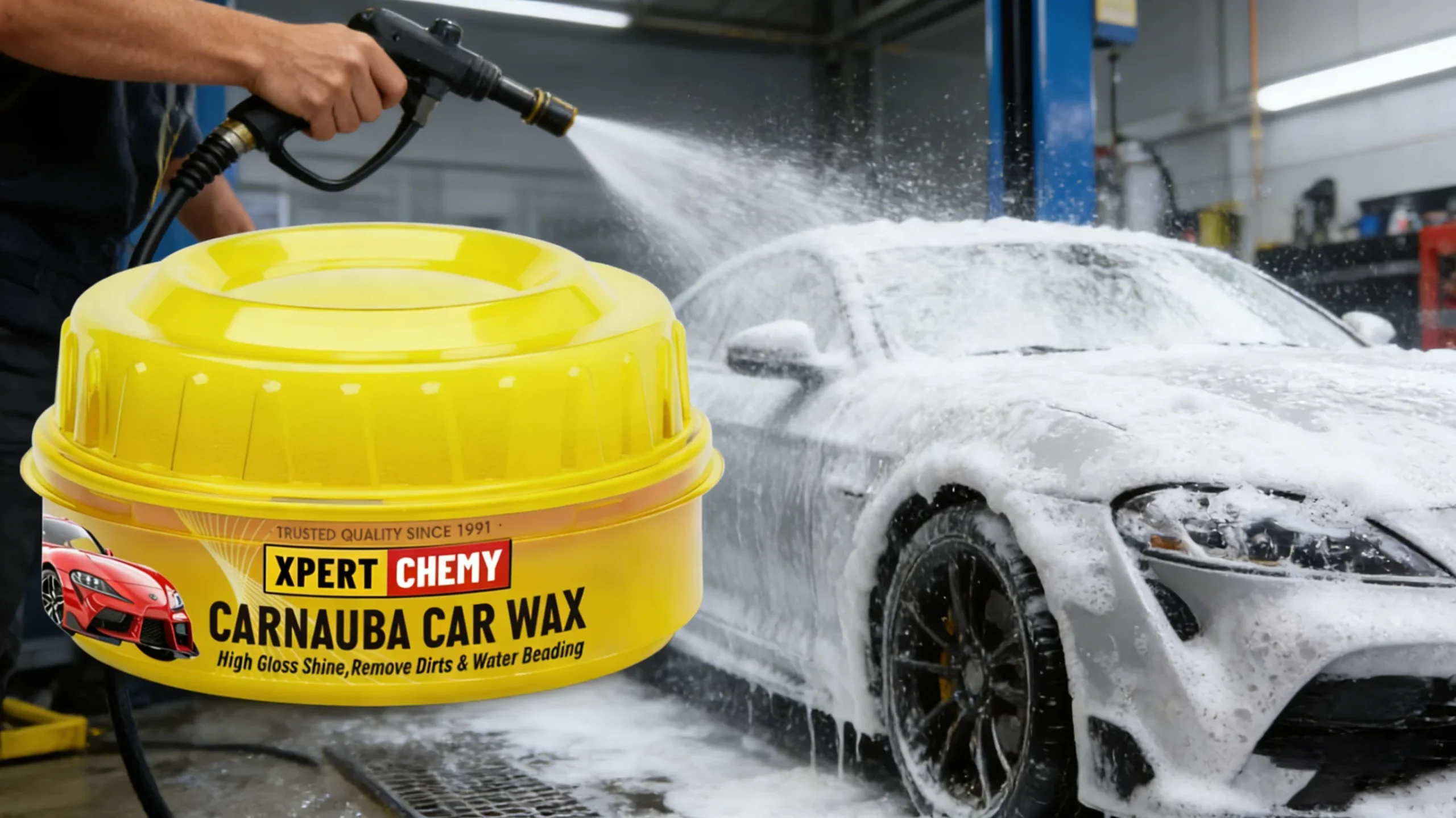
For businesses sourcing premium wax lines, XPERTCHEMY? Carnauba Car Wax Paste 300ml is available through stable wholesale supply for distributors and detailing channels. We also support OEM/ODM customization, including private label packaging and formula tuning for your target market.
Internal resources: XPERTCHEMY? Carnauba Car Wax Paste 300ml, and XPERTCHEMY Blog.