This Is Not a Yes/No Question
“Do I need primer?” is one of the most debated questions in solvent welding. Some crews always prime. Some only prime on larger pipe. Others skip primer unless an inspector requests it. The truth is that primer decisions depend on specification, local code practice, substrate condition, and risk tolerance for the system you are building.
What Primer Actually Does
Primer is not just a cleaner. In properly designed systems, it helps prepare the surface for solvent action by softening and conditioning the material. That can improve cement penetration and fusion consistency, especially in less-than-ideal conditions such as aged pipe surfaces, low ambient temperatures, or larger diameters.
If you think of cement as the bonding chemistry, primer is often the surface-conditioning step that helps that chemistry perform consistently.
When Skipping Primer Carries More Risk
- Large-diameter joints where fusion consistency is harder to maintain
- Cold-weather jobs where solvent response slows down
- Critical systems where failure consequences are high
- Work where pipe surfaces are weathered, oxidized, or inconsistently prepared
In these scenarios, skipping primer to save minutes can create expensive uncertainty later.
When One-Step Systems Are Used
Some products and installation methods are designed for one-step use in specific applications. If you are using such a method, the correct rule is simple: follow that product’s technical instructions exactly. “One-step” does not mean “any cement, any pipe, any condition.” It means a defined process with boundaries.
A disciplined installer asks three questions before skipping primer:
- Is this method explicitly approved for this material and service?
- Is it accepted by local inspection practice?
- Does current site condition still match the method assumptions?
Field Decision Framework You Can Actually Use
Use this practical framework instead of arguments on the jobsite:
- Regulatory check: if code or spec requires primer, the decision is over.
- Application check: hot water, larger diameters, or high consequence systems should push you toward primer use.
- Condition check: if surfaces are not ideal, primer improves confidence.
- Schedule check: never trade long-term reliability for short-term speed.
Quality Control Habits That Matter More Than Debates
Whether you use one-step or two-step, most failures still come from weak execution: poor cut quality, no deburring, delayed assembly, wrong cement volume, movement during set, or premature pressurization. Primer cannot rescue bad technique, but good technique plus the right chemistry dramatically lowers failure risk.
Wholesale Note for Contractors and Distributors
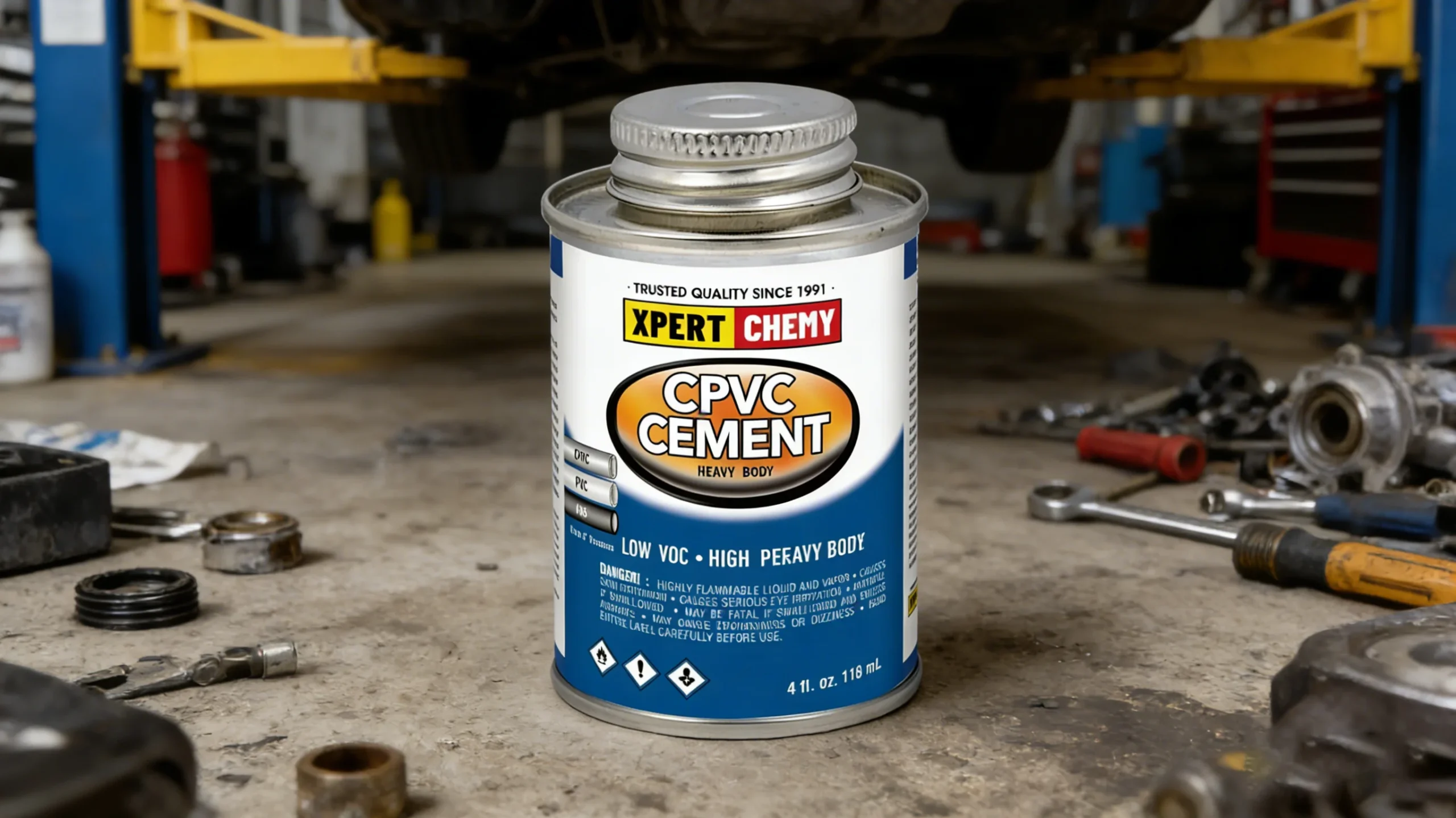
If you manage recurring CPVC installations, product consistency is a major advantage. Xpertchemy Heavy Bodied CPVC Cement 118ml is available for wholesale procurement, which helps teams standardize training and reduce on-site guesswork.
For project buyers, standardized supply is often the fastest path to consistent workmanship across crews and locations.
Final Take
Primer is not a religion and not a shortcut target. It is a risk-control tool. Decide based on code, application, and conditions, then execute the chosen method precisely. Reliable solvent welding is built on process discipline, not assumptions.