Carnauba Wax vs Ceramic Coating: The Daily Driver’s Dilemma Solved
For the everyday car owner, the driveway is often the final stop in a long day. The last thing you want is a high-maintenance ritual to keep your car looking good. Yet, between the satisfying deep shine of a fresh wax job and the mythical, years-long promise of a ceramic coating, the choice isn’t just about aesthetics—it’s about lifestyle, budget, and real-world practicality. This isn’t an enthusiast’s debate; it’s a decision for anyone who wants their daily driver to look great without turning car care into a second job. We’ll cut through the marketing hype and compare carnauba wax vs ceramic coating on the metrics that matter most to you, your customers, or your business.
Understanding the Contenders: What Each Product Actually Is
Before diving into performance, it’s crucial to understand the fundamental nature of these two finishes. They are not interchangeable products; they are from different categories of paint protection.
Carnauba Wax: The Natural, sacrificial Shield
Carnauba wax is harvested from the leaves of the Copernicia prunifera palm, native to Brazil. It’s a natural substance, often blended with solvents and oils to create a paste, liquid, or spray. When applied, it forms a thin, sacrificial layer on top of your car’s paint. Its primary job is to provide a high-gloss, “wet-look” shine and a degree of protection against light environmental contaminants like bird droppings, UV rays, and light moisture. Think of it as a cosmetic enhancement with a side of short-to-medium-term protection. It is not a permanent bond.
Ceramic Coating: The Synthetic, Chemical Bond
A ceramic coating (or nano-ceramic coating) is a liquid polymer, primarily composed of silica dioxide (SiO2) or titanium dioxide (TiO2). When applied, it chemically bonds (cures) with the factory paint, creating a permanent or semi-permanent layer that becomes the new surface of the paint. This layer is highly hydrophobic (water-repelling), chemically resistant, and incredibly hard. Its shine is a byproduct of a perfectly smooth, glass-like surface, not a wax film. It’s a true paint protection system designed for longevity.
The Face-Off: Key Comparison Points for Real-World Use
Let’s evaluate the two on the criteria that define their suitability for daily driving and business applications.
1. Shine & Depth: The “Wow” Factor
- Carnauba Wax: Renowned for its warm, rich, deep gloss. It enhances the paint’s color by filling in microscopic imperfections, creating that coveted “wet look” that many consider the ultimate in automotive beauty. The shine is immediate and dramatic.
- Ceramic Coating: Produces a crisp, sharp, glassy reflectivity. It maximizes the paint’s clarity and smoothness, resulting in a mirror-like finish that looks incredibly clean and “new.” The depth is different—more about pristine reflection than warm glow.
- Verdict: This is subjective. Traditionalists and show car enthusiasts often prefer the organic depth of carnauba wax. Those who prefer a sharp, modern, glassy look lean toward ceramic coating.
2. Durability & Longevity: The Protection Timeline
This is the most significant practical difference.
* Carnauba Wax: Lasts approximately 4-8 weeks on a daily driver. Environmental exposure, washing, and rain gradually wear it away. It requires frequent reapplication (every 1-2 months) to maintain its protective and aesthetic benefits.
* Ceramic Coating: A professionally applied, high-quality coating can last 2-5 years or more. It does not wash off; it slowly abrades over time. This “install and forget” nature is its biggest selling point.
* Verdict: Ceramic coating wins by a massive margin for longevity. For a business, this means either frequent waxing services or a one-time, high-ticket coating sale.
3. Application Complexity & Cost
- Carnauba Wax: Can be applied by anyone with basic tools (foam applicator, microfiber towels) in a shaded area. It’s a DIY-friendly process. The product cost is low ($20-$50 per bottle), but the labor cost (time) is recurring.
- Ceramic Coating: Requires an immaculate, contaminant-free surface (often needing paint correction first). Application is technical—poor application can cause high spots, streaking, or hazing that is difficult to correct. It is almost exclusively a professional service. The material cost is high ($500-$2500+ for full car), reflecting the product quality and labor intensity.
- Verdict: Carnauba wax is accessible and low-cost upfront. Ceramic coating is a significant professional investment with a much higher initial cost.
4. Protection Level: What It Actually Defends Against
- Carnauba Wax: Provides good protection against UV fading and minor water spotting. It offers a barrier against light bird droppings and tree sap, but these contaminants can still etch paint if not washed promptly. It has minimal scratch resistance.
- Ceramic Coating: Offers superior UV protection, extreme hydrophobicity (water beads and rolls off, taking dirt with it), and high chemical resistance against bird droppings, bug splatter, and acid rain. Its hardness (9H on the pencil scale, though this is a lab test) provides significant resistance to fine swirls and light scratches from washing.
- Verdict: Ceramic coating provides a far more robust and resilient protective barrier.
5. Maintenance: The Day-to-Day Reality
- Carnauba Wax: Washing is standard. However, wax layers can build up and need to be stripped occasionally. Shine and protection diminish steadily between applications.
- Ceramic Coating: Maintenance is dramatically easier. The hydrophobic effect means the car stays cleaner longer, and a simple maintenance wash with a pH-neutral soap is often all that’s needed. There is no “reapplication” during its lifespan, only occasional use of a ceramic boost spray to enhance the layer.
- Verdict: Ceramic coating wins for simplified, long-term maintenance.
Carnauba Wax vs Ceramic Coating: Quick-Reference Comparison Table
| Feature | Carnauba Wax | Ceramic Coating |
|---|---|---|
| Composition | Natural plant wax | Synthetic silica-based polymer |
| Longevity | 1-2 months | 2-5+ years |
| Application | DIY-friendly, simple | Professional-only, complex |
| Initial Cost | Low ($20-$50) | Very High ($500-$2500+) |
| Shine Type | Warm, deep, “wet look” | Crisp, glassy, reflective |
| Protection Level | Good against UV, light contaminants | Excellent against UV, chemicals, scratches |
| Maintenance | Regular reapplication needed | Easy washes, optional boost sprays |
| Best For | Enthusiasts who love the ritual, budget owners, seasonal cars | Daily drivers seeking “set-and-forget,” high-value vehicles, commercial fleets |
Who Should Choose What? A Practical Guide
Choose Carnauba Wax If:
* You enjoy the hands-on, ritualistic process of detailing your car.
* Your budget for car care is tight upfront.
* You have a classic, weekend, or seasonal car that isn’t exposed to daily elements.
* You want the traditional, warm depth of shine and don’t mind regular upkeep.
* You are a detailing studio offering affordable, high-margin add-on services.
Choose Ceramic Coating If:
* You own a daily-driven, new, or high-value vehicle and want to preserve its paint.
* You want maximum protection with minimal ongoing effort.
* You are willing to make a significant one-time investment for long-term peace of mind and easier washes.
* You prioritize a sharp, modern, glass-like finish.
* You are a professional detailer or distributor offering a premium, high-profit service or product line.
The Middle Ground: Hybrid Solutions & Maintenance
The market offers products that bridge the gap. “Ceramic waxes” or “hybrid ceramic sprays” contain small amounts of ceramic polymers blended with wax or polymers. They offer some of the hydrophobics of a coating and some of the depth of wax, with durability often lasting 3-6 months. They are an excellent step up from pure wax for DIYers. For ceramic coating owners, using a dedicated ceramic maintenance shampoo or spray is crucial to preserve and enhance the coating’s properties without stripping it.
A Note on Traditional Excellence
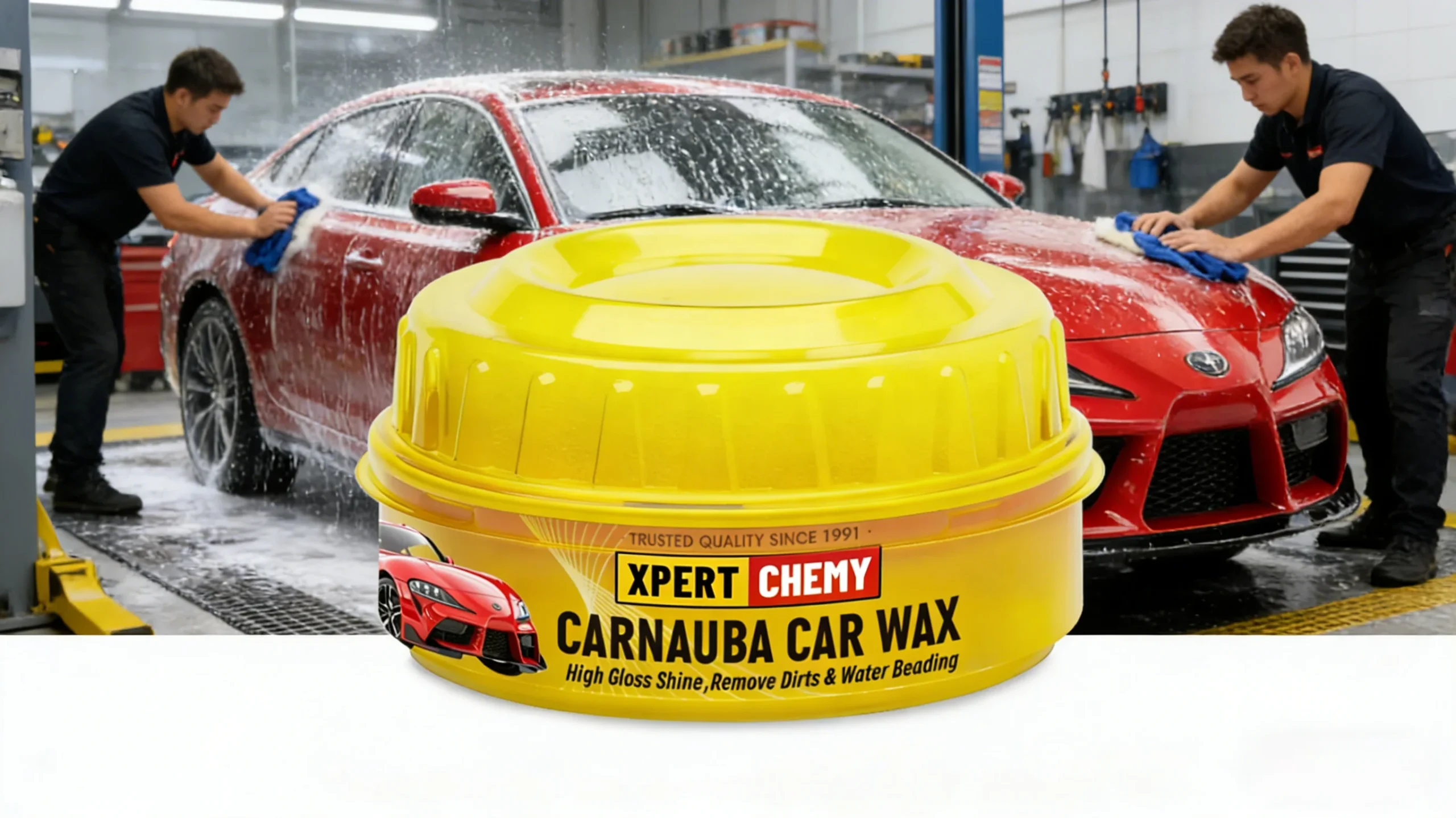
For those who cherish the timeless ritual and unparalleled warmth of a true carnauba wax finish, premium paste formulations remain the gold standard. They offer a sensory detailing experience and a depth of shine that is still unmatched. Businesses catering to this market can rely on consistent quality. XPERTCHEMY? Carnauba Car Wax Paste 300ml is engineered for this purpose—delivering that rich, hand-rubbed luster that detailing enthusiasts demand. We provide reliable wholesale supply to retailers and detailing studios, with full OEM/ODM customization available to align with your brand’s specific needs and market positioning.
Practical Recommendation for Daily Drivers
If your top priority is deep, warm visual gloss and you enjoy regular maintenance, carnauba wax is still a strong choice. If your top priority is longer protection cycles and lower maintenance effort, ceramic coating is usually the better fit.
For many users, the most practical strategy is to start with your real maintenance habit, not with marketing claims. The best protection plan is the one you can actually maintain consistently.
Frequently Asked Questions (FAQ)
1. Which shines better on dark paint, carnauba wax or ceramic coating?
Carnauba wax often gives a warmer, deeper glow on dark colors, while ceramic coating gives a sharper, glass-like reflection. The preferred look is mostly subjective.
2. Is ceramic coating always better for a daily driver?
Not always. It is better for low-maintenance long-term protection, but many drivers still prefer carnauba for finish character and lower upfront cost.
3. How often should I reapply carnauba wax on a daily-driven car?
In most climates, reapplication every 4 to 8 weeks is a practical interval, depending on washing frequency, sun exposure, and parking conditions.
4. Where can I check the related product and more guides?
You can view XPERTCHEMY? Carnauba Car Wax Paste 300ml and read more maintenance articles on the XPERTCHEMY Blog.
Conclusion
Carnauba wax vs ceramic coating is not a one-size-fits-all decision. For daily drivers, the right answer depends on your finish preference, budget, and maintenance routine.
If you need stable wholesale supply and OEM/ODM customization for car care lines, XPERTCHEMY? can support your business requirements with flexible product programs.