For car enthusiasts, detailers, and business owners alike, the quest for a deep, glossy, and protected finish is endless. Two of the most revered products in the automotive care world are ceramic coatings and carnauba wax. But a common question arises: can you put carnauba wax over ceramic coating? The answer isn’t a simple yes or no—it’s a nuanced discussion about chemistry, goals, and long-term vehicle care. This guide cuts through the hype to provide practical, realistic advice for everyone from daily drivers to wholesale distributors.
Understanding the Contenders: Ceramic Coating vs. Carnauba Wax
Before layering anything, you must understand what each product is and what it does.
Ceramic Coating: The Semi-Permanent Shield
A ceramic coating is a liquid polymer (often silica/silicon dioxide based) that chemically bonds to a vehicle’s factory paint. Once cured (typically 24-72 hours), it forms an extremely hard, transparent, and durable sacrificial layer. Its primary functions are: * Long-Term Protection: Shields against UV rays, chemical stains (bird droppings, tree sap), light scratches, and swirl marks. * Hydrophobicity: Creates a strong “beading” effect, causing water to sheet off the surface, taking dirt with it. * Gloss & Depth: Enhances the paint’s reflective qualities, providing a “wet” look that lasts for years (typically 2-5 years with proper care). * Maintenance: Requires specific pH-neutral soaps and avoids abrasive cleaning methods. It is not a “set and forget” solution but drastically reduces washing effort.
Carnauba Wax: The Natural Finisher
Carnauba wax is harvested from the leaves of the Copernicia prunifera palm in Brazil. It is the hardest natural wax available. In automotive detailing, it’s prized for: * Warm, Rich Gloss: Imparts a unique, deep, “glass-like” shine that many consider superior to synthetic sealants for visual depth. * Water Beading: Provides excellent hydrophobic properties, though typically less aggressive than a fresh ceramic coating. * Ease of Application: Available as paste or liquid, it’s user-friendly for manual application. * Short-Term Protection: Its primary weakness. A standalone carnauba wax layer typically lasts 4-8 weeks on a daily driver, as it sits on top of the paint and is removed by washing, UV degradation, and environmental fallout.
The Core Question: Compatibility and Purpose
Yes, you can physically apply a quality carnauba wax over a fully cured ceramic coating. The ceramic coating provides a chemically inert, perfectly smooth, and non-porous surface. A wax will adhere to it without issue, much like it would to a well-waxed paint surface. However, the critical question is “Why would you?” The purpose dictates the outcome.
- For Enhanced Gloss (The “Topper” Method): This is the most common and valid reason. Some detailers and enthusiasts apply a thin layer of a high-quality, pure carnauba (or a blend) over a ceramic coating as a final step. The theory is that the wax fills in any microscopic imperfections in the coating’s surface and adds its signature warm gloss on top. The ceramic coating still does all the heavy lifting of protection.
- As a “Sacrificial” Layer: Since wax is easier and cheaper to remove than a ceramic coating, some apply it as a top layer to take the brunt of minor washing abrasion and environmental contaminants. When the wax dulls, it’s removed with a maintenance wash, and the ceramic coating underneath remains intact.
Crucial Warning: Applying a wax does not “recharge” or “boost” the hydrophobic properties of the ceramic coating. The wax’s own beading effect will be what you see. In fact, a thick wax layer can temporarily interfere with the coating’s optimized sheeting action until it wears off unevenly.
Comparison: Ceramic Coating vs. Carnauba Wax (as a Topper)
| Feature | Ceramic Coating (Standalone) | Carnauba Wax Applied Over Ceramic |
|---|---|---|
| Primary Role | Long-term protective shield | Temporary gloss enhancer / sacrificial layer |
| Durability | 2-5 years | 4-8 weeks (wax layer only) |
| Hydrophobicity | Strong, consistent sheeting | Beading effect from wax; may mask coating’s properties |
| Gloss Type | Crisp, reflective, “wet” look | Warm, deep, “glass-like” richness |
| Protection Level | High (UV, chemicals, light scratches) | Low (wax provides minimal additional scratch/chem protection) |
| Maintenance | Requires coating-specific soaps | Can be maintained with regular wax-safe soaps; wax layer will deplete |
| Cost (Long-term) | High initial cost, low recurring | Low initial cost, recurring application needed |
| Best For | Owners seeking maximum, years-long protection | Enthusiasts wanting a specific gloss profile; detailers offering an upsell service |
The Potential Pitfalls: What Can Fail
- Wax Buildup: Applying wax too frequently or in thick layers can lead to buildup. This hazy film can actually dull the finish over time and is difficult to remove without a dedicated clay bar or polishing, which risks removing the ceramic coating if done improperly.
- Using the Wrong Wax: Avoid waxes with cleaning agents (like “cleaner waxes”) or harsh solvents. These can degrade the ceramic coating’s surface over time. Always use a pure carnauba or a wax specifically labeled as safe for coated surfaces.
- Misguided Expectations: Do not expect the wax to extend the life of your ceramic coating. The coating’s lifespan is determined by its quality, application, and proper maintenance—not by what you put on top of it.
- Interference with Coating Chemistry: While rare with reputable products, some wax formulations (especially those with high silicone content) can potentially interact with certain coating chemistries. Always test on a small, inconspicuous area first.
The Recommended Application Process (If You Choose To)
If your goal is that extra layer of warm gloss, follow this method:
- Ensure Perfect Foundation: The ceramic coating must be fully cured (consult your installer’s or product’s guidelines, usually 7-30 days). The car must be impeccably clean and decontaminated (clay bar used).
- Use Minimal Product: Apply a very small amount of wax to your applicator pad. Less is more. You are not trying to build a thick layer of protection; you are seeking a microscopic top layer for gloss.
- Apply Thinly and Evenly: Work on one panel at a time, applying a hazy, ultra-thin coat. Allow it to haze (usually 1-5 minutes, per product instructions).
- Buff to a High Shine: Use a clean, soft microfiber towel to buff off all residue with medium pressure. Any residue left will appear as haze.
- Cure: Avoid getting the car wet for 12-24 hours to let the wax fully bond to the coating’s surface.
Alternatives to Carnauba Wax for Topping Ceramic Coatings
For those seeking a more durable top layer than wax but easier than a full coating re-application, consider: * Ceramic Coating Maintenance Sprays/Toppers: These are silica-based sprays designed to “rejuvenate” the hydrophobic properties of an existing coating. They are generally more compatible and durable than wax. * Hybrid Ceramic Sealants: Synthetic products that offer a balance between the ease of wax and the durability of a coating. They can provide a few months of enhanced protection and gloss. * Simply Maintaining the Coating: Often, the best result is
Supplier Note
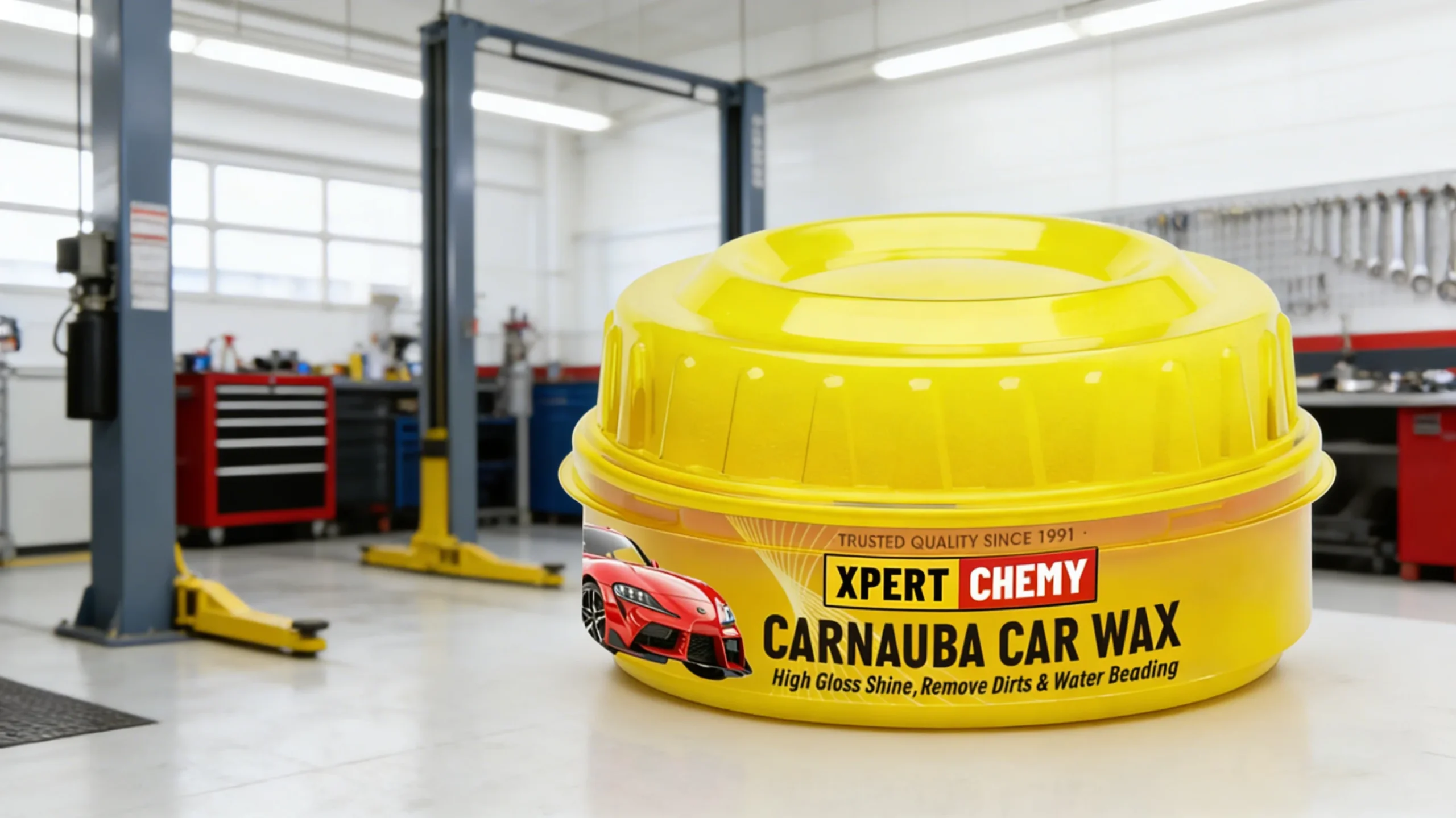
For businesses sourcing premium wax lines, XPERTCHEMY? Carnauba Car Wax Paste 300ml is available through stable wholesale supply for distributors and detailing channels. We also support OEM/ODM customization, including private label packaging and formula tuning for your target market. Internal resources: XPERTCHEMY? Carnauba Car Wax Paste 300ml, and HEMY Blog.