Yes, cold weld epoxy can bond aluminum, cast iron, and stainless steel, but not with one universal prep method. Each metal has a different surface chemistry and contamination profile, so using the same process on all three often causes random failures.
If you want reliable repairs and fewer callbacks, treat this as a metal-specific bonding job, not just an adhesive application.
Short answer by metal type
- Aluminum: bonds well when oxide and oils are removed immediately before application.
- Cast iron: bonds well but needs aggressive degreasing because oil can wick out of porosity.
- Stainless steel: bonds can be strong, but passive surface layers require deliberate abrasion and clean handling.
Why one prep method fails across all metals
These three substrates behave differently:
- Aluminum forms oxide rapidly after cleaning.
- Cast iron can hold embedded oil and graphite-related residues.
- Stainless steel has a stable passive film and often lower surface energy than carbon steel.
That means the “degrease once and apply” approach may work on one part and fail on the next.
Aluminum: fast oxidation is the main challenge
Typical failures on aluminum: edge lifting, peel failure, or weak bonding on polished surfaces.
Recommended prep sequence:
- Degrease thoroughly to remove machining oil and fingerprints.
- Abrade to a fresh, matte surface.
- Degrease again and dry fully.
- Apply epoxy promptly before oxide rebuild becomes significant.
On thin aluminum sections, avoid high local heat during cure acceleration because distortion can introduce peel stress.
Cast iron: contamination control is everything
Typical failures on cast iron: local delamination over porous zones or oily pockets.
Why it happens: old castings and housings often contain deep contamination from oil, coolant, and carbon residue.
Recommended prep sequence:
- Initial solvent clean.
- Mechanical abrasion or light grinding to open clean structure.
- Second and sometimes third degrease cycle.
- Dry and inspect for sweating oil before epoxy placement.
If oil reappears after cleaning, repeat prep. Skipping this step is one of the most common causes of cast-iron bond failure.
Stainless steel: passive film and smooth finishes reduce adhesion
Typical failures on stainless: bond appears fine at first, then peels under vibration or thermal cycling.
Recommended prep sequence:
- Degrease with clean wipes and fresh solvent.
- Create a consistent anchor profile with abrasion (do not leave mirror finish).
- Remove debris and oils again.
- Avoid touching prepped surface with bare hands before application.
For dynamic service environments, increase bonded area and reduce peel-prone geometry whenever possible.
Bond design matters as much as chemistry
Even with perfect prep, geometry can cause failure if load is concentrated at an edge. For better durability:
- Prefer shear-dominant load paths over peel-dominant ones.
- Feather repair transitions to reduce stress concentration.
- Use sufficient bond area for expected load and vibration level.
- Do not rely on thin cosmetic layers for structural repair.
How to verify bond quality before full service
Use a staged validation approach:
- Stage 1: visual and hardness check after cure.
- Stage 2: light mechanical test in controlled conditions.
- Stage 3: full load only after cure and temperature stabilization.
For critical applications, keep a witness coupon prepared with the same batch and prep method. It provides a useful quality reference.
When cold weld epoxy is not the best choice
Consider alternatives if:
- The joint sees extreme continuous heat beyond system limits.
- The part requires high structural performance under cyclic fatigue without design allowance.
- Chemical immersion conditions exceed the tested resistance profile.
In those cases, mechanical repair, insert systems, or welded replacement may be more appropriate.
Purchasing guidance for wholesalers and distributors
If you supply cold weld epoxy for mixed-metal customers, your technical support should include substrate-specific prep instructions. This improves user success far more than generic “metal bonding” claims.
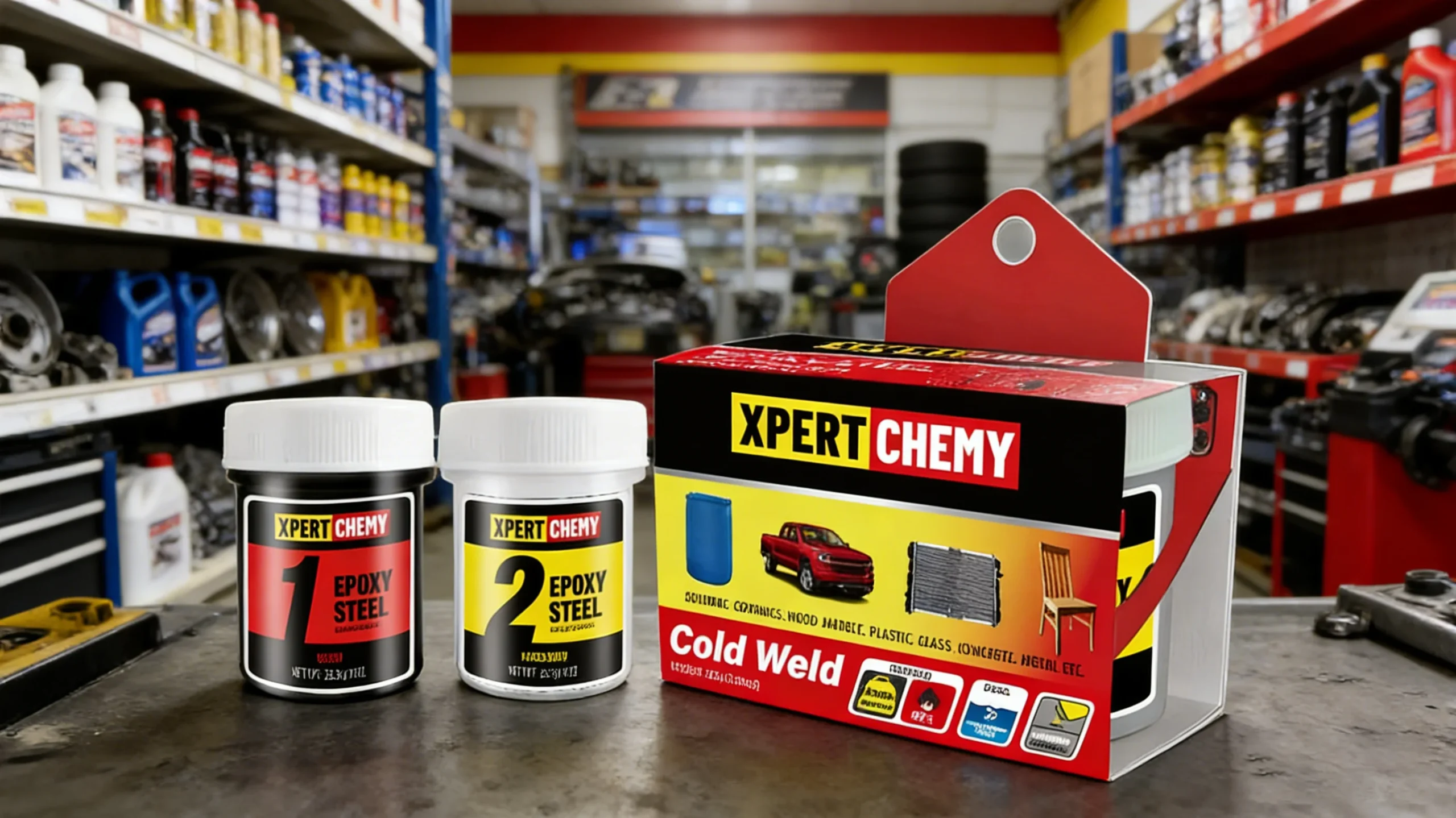
For XPERTCHEMY® Cold Welding Epoxy Grey programs, buyers often ask for:
- TDS/SDS documentation
- Recommended prep by substrate
- Cure guidance by temperature
- MOQ, lead time, and packaging options for resale
Providing this information at quote stage increases conversion and reduces post-sale support cost.
Final takeaway
Cold weld epoxy can bond aluminum, cast iron, and stainless steel effectively, but only when prep is matched to the substrate. If you standardize the right process for each metal, bond consistency and repair durability improve dramatically.
For multi-metal maintenance work, you can also check our cold weld epoxy for aluminum, cast iron, and stainless steel for practical repair use.