
Pressure testing too early is one of the most expensive shortcuts in PVC installation. A line may look fine during assembly, then fail once test pressure rises. The reason is simple: solvent-welded joints need enough time for proper fusion and strength development. If you test before that process matures, weak interfaces are exposed immediately.
This guide gives installers and project managers a practical method to decide cure time before pressure testing. The answer is never one fixed number. It changes with three variables: pipe size, test pressure (PSI), and temperature.
Set Time vs Cure Time: The Difference That Prevents Rework
Many jobs fail because these two terms are confused:
- Set time: the joint can hold position and basic handling.
- Cure time: the joint has developed sufficient strength for pressure loading.
A joint that is “set” is not automatically ready for hydrostatic or pneumatic testing. Treat pressure testing as a structural event, not just a schedule milestone.
The 3 Variables That Actually Control Safe Test Timing
1) Pipe size
Larger diameters hold more solvent, have more interface area, and generally require longer cure windows. Small residential lines often cure faster than larger commercial runs.
2) Test pressure (PSI)
Higher PSI exposes defects sooner. A joint that survives low pressure may fail when test pressure ramps up. The higher the target pressure, the more conservative your cure plan should be.
3) Ambient and pipe temperature
Cold weather slows solvent evaporation and polymer fusion. The pipe surface temperature matters as much as air temperature. If materials are cold, extend cure time significantly.
A Practical Planning Matrix for Field Teams
Use this as a conservative planning reference when you prepare schedules:
- Warm conditions (above 16C / 60F), small pipe, lower-pressure testing: often same-day testing may be possible after adequate cure.
- Mild conditions (4-16C / 40-60F), medium diameter, moderate pressure: overnight cure is usually safer and easier to manage.
- Cold conditions (below 4C / 40F), larger pipe, or high PSI: plan extended cure windows, frequently 24 hours or longer.
When factors conflict, always follow the most conservative condition in your matrix.
How Teams Should Sequence Work to Avoid Schedule Pressure
The fastest projects are often the ones with better sequencing, not faster bonding. A reliable method is:
- Assemble and mark all joints by zone.
- Move to another zone while curing progresses.
- Return for staged pressure testing, not full load immediately.
- Escalate to final PSI only after visual and low-pressure checks pass.
This approach reduces panic decisions and prevents expensive retesting.
Frequent Mistakes Before Pressure Testing
- Using one cure time for every diameter.
- Ignoring low material temperature in winter or shaded areas.
- Applying full test pressure immediately instead of staged ramp-up.
- Over-brushing cement, which can delay stabilization in some joints.
- Assuming dry-touch means pressure-ready.
Checklist Before You Start the Test Pump
- Correct cement type verified for the pipe material and service.
- Insertion depth marks confirmed at each joint.
- Cure window recorded and signed by site supervisor.
- Ambient and pipe temperature documented.
- Test method reviewed (hydrostatic/pneumatic) and safety controls in place.
Procurement Note for Distributors and Importers
Consistent results depend on both installer technique and product quality consistency. If you are supplying plumbing channels, XPERTCHEMY® PVC Solvent Cement 237ml is available for wholesale programs with stable supply support for distributor and contractor demand.
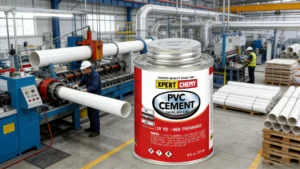
For buyers managing multiple regions, XPERTCHEMY can support bulk procurement planning and repeat replenishment cycles so project teams are not forced to use aging stock under schedule pressure.
Bottom Line
The correct cure time before pressure testing is a decision based on size, PSI, and temperature, not a universal number from memory. Conservative timing and disciplined test sequencing will save more money than any “faster” shortcut on site.