
For anyone invested in vehicle appearance—from daily drivers to show car enthusiasts, professional detailers, and auto care distributors—the choice between carnauba wax vs synthetic wax is a fundamental decision. It’s not just about a temporary shine; it’s about understanding protection, longevity, and true value. This comprehensive, unbiased analysis breaks down the core characteristics of each, moving beyond marketing hype to provide practical insights for making an informed choice.
Understanding the Core Difference: Natural vs. Man-Made
At its heart, the debate stems from composition. * Carnauba Wax: Sourced from the leaves of the Copernicia cerifera palm tree in Brazil, it’s often called the “Queen of Waxes.” It’s a natural, hard wax that must be refined and blended with oils or solvents for application. Its prized characteristic is a rich, warm, “wet” gloss. * Synthetic Wax (Polymer/Sealant): A laboratory-created product, typically based on polymers like acrylics, silicones, or resins. These molecules bond chemically and physically to the paint surface, forming a durable, protective layer. Modern formulations have advanced to mimic the depth of carnauba while offering superior longevity.
Durability & Longevity: How Long Does the Protection Last?
This is the most critical differentiator for both car owners and businesses measuring service intervals. Carnauba Wax: * Mechanism: Bonds physically to the paint surface. It sits on top rather than bonding chemically. * Typical Longevity: 4 to 8 weeks on a daily driver exposed to the elements. In a garage or mild climate, it may last 2-3 months. * Vulnerability: Susceptible to degradation from UV rays, rain, road salts, and frequent washing. Each wash strips away a portion of the wax layer. * Best For: Enthusiasts who enjoy frequent detailing and seek the ultimate, short-term showroom glow. It’s ideal for cars that are pampered and regularly re-applied. Synthetic Wax / Paint Sealant: * Mechanism: Forms a cross-linked polymer network that chemically bonds and physically fills micro-scratches in the clear coat. * Typical Longevity: 3 to 6 months, with high-end products lasting up to a year under ideal conditions. It withstands multiple washes far better than natural wax. * Resistance: Excellent resistance to UV fading, chemical etchings (from bird droppings, tree sap), and soap-based cleaners. * Best For: Daily drivers, fleet vehicles, commercial fleets, and anyone seeking “set-and-forget” protection with minimal maintenance.
Comparison Table: Carnauba vs. Synthetic Wax
| Feature | Carnauba Wax (Natural) | Synthetic Wax / Sealant (Polymer-based) |
|---|---|---|
| Composition | Natural plant-derived wax | Lab-created polymers (acrylic, silicone, resin) |
| Primary Bond | Physical adhesion | Chemical & physical bonding |
| Gloss Profile | Warm, deep, “wet” look | Sharp, mirror-like, glassy reflection |
| Typical Durability | 4-8 weeks (1-3 months) | 3-6 months (up to 12 months) |
| Wash Resistance | Low; strips with each wash | High; withstands multiple washes |
| Chemical Resistance | Moderate; susceptible to acids/bird droppings | High; better barrier against contaminants |
| Application Ease | Can require more buffing skill; hazing risk | Generally easier; less prone to hazing; often spray-on |
| Cost Per Application | Lower material cost, higher labor frequency | Higher material cost, lower labor frequency |
| Best Use Case | Concours shows, enthusiast pampering, warm glow | Daily driver protection, fleet maintenance, long-term value |
The Gloss Factor: Depth vs. Mirror-Like Sharpness
This is subjective but important for different aesthetic goals. * Carnauba’s Gloss: It enhances the depth of the paint. Light penetrates the wax layer, reflects off the paint, and passes back through, creating a rich, three-dimensional, almost liquid appearance. It’s often described as “warm” or “deep.” * Synthetic’s Gloss: It creates a supremely flat, reflective surface. By filling imperfections and creating a smooth, glassy top layer, it produces a sharp, mirror-like reflection. It maximizes the paint’s clarity and sharpness, sometimes appearing “cooler” or more sterile. Reality Check: Top-tier synthetic sealants have closed the gap dramatically. Many users find the difference negligible on a well-prepped surface. The choice often comes down to personal preference for the type of shine.
True Cost Per Application: Beyond the Jar Price
For distributors, detailers, and cost-conscious owners, cost per application (CPA) is a more valuable metric than the upfront purchase price. Calculating CPA: CPA = (Product Cost) ÷ (Number of Effective Applications)
- Carnauba Wax Example: A $25 jar provides 8-10 applications on an average sedan. CPA ≈ $2.50 – $3.13 per application. However, you must reapply 4-6 times per year.
- Synthetic Sealant Example: A $40 bottle provides 6-8 applications (often more concentrated). CPA ≈ $5.00 – $6.67 per application. But you may only need 1-2 applications per year.
The Verdict: While the per-application cost is higher for synthetics, the drastically reduced labor and product frequency over a year often makes synthetics the more economical choice for long-term protection, especially in a commercial setting. Carnauba’s value is in the experience and specific aesthetic, not long-term economics.
Which One Should You Choose? A Practical Guide
Choose Carnauba Wax If: * You are a detailing enthusiast who enjoys the ritual of application. * Your goal is maximum short-term depth and warmth for a show or event. * Your vehicle is a garage-kept, second vehicle that isn’t exposed to harsh conditions. * You are willing to reapply every 1-2 months for the peak look. Choose a Synthetic Sealant If: * Your vehicle is a daily driver, commuter, or fleet vehicle. * You prioritize low-maintenance, long-lasting protection (3+ months). * You need superior resistance to UV, road salt, and frequent washing. * You are a professional detailer seeking efficient, reliable results for clients. * You value predictable, consistent performance in all climates. Pro-Tip for Detailers & Distributors: Many professionals use a hybrid approach. Apply a synthetic sealant as a durable base layer for long-term protection, then use a carnauba wax as a “top coat” for events or when the client desires that ultimate, deep glow. This combines benefits but requires understanding both products.
Frequently Asked Questions (FAQ)
Q1: Can I use synthetic wax over carnauba or vice versa? A1: Yes, but order matters. Always apply the synthetic sealant first as your base coat (it bonds to the clean paint). Once cured, you can apply a carnauba wax on top as a sacrificial top layer for added gloss. Applying carnauba first and then a synthetic will likely cause the synthetic to bead and not bond properly. Q2: Is carnauba wax better for my dark-colored car? A2: Not inherently. Dark colors benefit from any high-quality product that fills micro-scratches. Carnauba’s warm tone can sometimes mask very fine swirls on dark paint, but a good synthetic sealant applied correctly will provide equal or better clarity and scratch-hiding properties. The key is proper paint correction before waxing. Q3: Are synthetic waxes bad for the environment or my paint? A3: Modern, quality synthetic sealants are safe for automotive paint when used as directed. They are inert once cured. The environmental concern is more about production and VOCs during manufacturing, not application. Carnauba is a renewable natural resource, but over-harvesting can be an ecological issue; reputable suppliers use sustainable practices. Q4: What about “hybrid” or “synthetic-blend” waxes? A4: These products combine carnauba with synthetic polymers. They aim to offer the warm gloss of carnauba with some of the durability of synthetics. They are a good middle ground for consumers. However, the performance is a compromise—they won’t last as long as a pure synthetic sealant nor provide the absolute depth of a pure carnauba. For professionals, pure products offer more predictable, controllable results.
For Distributors & Wholesale Buyers: The Strategic Choice
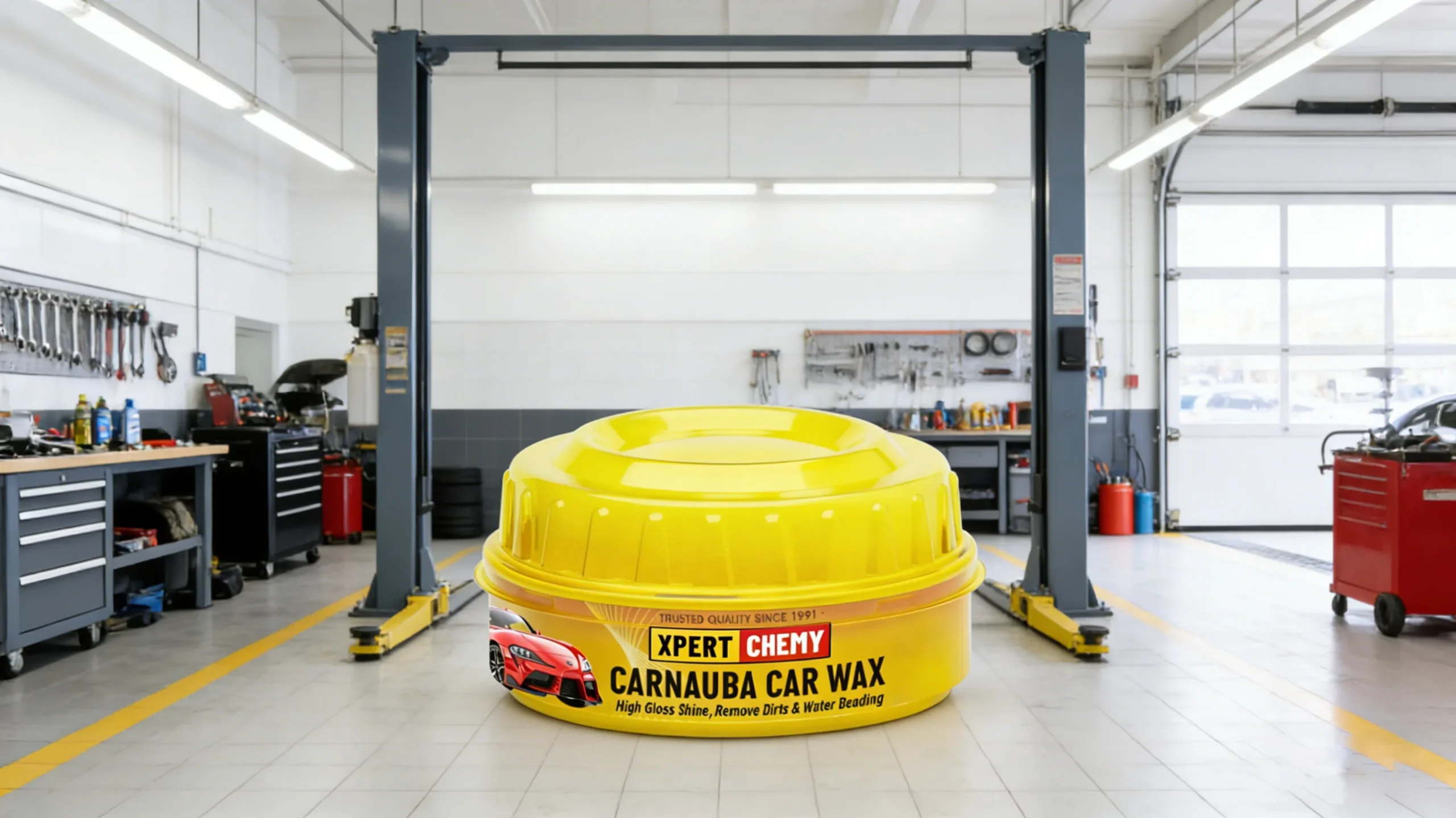
Your inventory strategy should align with your market. For the B2B detailing studio, stocking a high-end synthetic sealant (for 80% of jobs) and a premium carnauba (for the 20% seeking concours-level results) is optimal. For auto care distributors and wholesale buyers, understanding this carnauba wax vs synthetic wax dynamic allows you to cater to both the pragmatic fleet manager (synthetic) and the enthusiast retailer (carnauba). Offering both in your catalog meets the full spectrum of customer need. Marketing Integration: For businesses seeking a reliable, high-performance base product, XPERTCHEMY? Carnauba Car Wax Paste 300ml offers a classic, rich formula ideal for top-coat applications or enthusiasts who prioritize traditional warmth. We provide consistent wholesale supply and full OEM/ODM customization for brands looking to develop their own signature wax product line, from formula adjustments to private labeling.
Conclusion: It’s About the Right Tool for the Job
The carnauba wax vs synthetic wax debate has no single winner. Carnauba wax is the artisan’s choice for unparalleled, temporary depth and heritage. Synthetic Internal resources: XPERTCHEMY? Carnauba Car Wax Paste 300ml, and XPERTCHEMY Blog.