
For auto detailing studios and wholesale distributors, sourcing the right bulk car wax for detail shops is a critical business decision. The product you choose directly impacts your service quality, customer satisfaction, and profit margins. It’s not just about finding the lowest price per ounce; it’s about securing a consistent, high-performing product that meets the diverse needs of your clientele and your operational workflow.
This guide cuts through the marketing hype. We outline seven non-negotiable factors to evaluate before committing to a bulk wax purchase, ensuring you invest in a product that delivers real value to your business and your customers’ vehicles.
1. Wax Type & Base Chemistry: Natural vs. Synthetic vs. Hybrid
The fundamental chemistry dictates the wax’s look, durability, and application characteristics.
- Natural Carnauba Wax: Harvested from Brazilian palm leaves, it’s the gold standard for a deep, warm, “wet” glow and exceptional water beading. However, pure Carnauba is relatively soft and has a shorter longevity (typically 4-6 weeks) compared to synthetics. It’s ideal for high-end, show-car detailing where ultimate depth is prioritized.
- Synthetic Polymer Wax (Sealant): Formulated from man-made polymers (like PTFE or acrylics), these create a hard, glass-like protective layer. They offer superior durability (often 3-6 months), chemical resistance, and slickness. The finish is brighter and more “plastic” than Carnauba’s warmth. Perfect for customers wanting long-term, low-maintenance protection.
- Hybrid Formulas: These combine Carnauba for depth with synthetic polymers for durability. They aim to offer the best of both worlds. When evaluating bulk car wax for detail shops, check the actual ratio of natural to synthetic. A true hybrid will list both prominently in ingredients.
Key Question for Buyers: What is your primary customer demand—maximum depth for special occasions or long-lasting, everyday protection?
2. Concentration & Solids Content
Wax concentration, often expressed as a percentage of “solids” (the actual wax/resin content), is a direct indicator of value and performance.
- High Concentration (20%+ solids): More product per application, better build-up of protection, and often a richer finish. These pastes or thick liquids require more effort to apply but yield superior results. They are cost-effective in the long run despite a higher upfront cost per pound.
- Low Concentration (<10% solids): Often spray-on or very liquid formulas. They are quick to apply but may require multiple coats for equivalent protection and offer less depth. They can be a good entry-level or maintenance product but may not satisfy clients seeking premium results.
- Ask the Supplier: Always request the technical data sheet (TDS) or safety data sheet (SDS). It should list the solids content or at least the primary ingredients. If a supplier is vague, proceed with caution.
3. Application Method & Ease of Use
Consider your shop’s workflow and the skill level of your technicians.
- Paste Wax: Traditional, high-concentration, applied with a foam or microfiber pad. Offers maximum control and is less prone to hazing if applied correctly. Ideal for experienced detailers.
- Liquid/Spray Wax: Faster application, great for quick detail touches or as a topper between full corrections. Can be more forgiving for beginners but may be harder to control on hot panels, potentially causing streaks if overused.
- For Bulk Buyers: Ensure the chosen application method aligns with your team’s efficiency. A paste wax that takes 30 minutes per car might slow down high-volume shops, while a spray might not meet the quality standards of a correction-focused studio.
4. Expected Durability & Environmental Resistance
Durability claims are often exaggerated. Look for realistic, conditional statements.
- Realistic Expectations: Carnauba-based: 4-8 weeks. Synthetic sealants: 3-6 months. Hybrids: 2-4 months. These assume proper surface preparation (decontamination, clay bar, paint correction) and normal driving conditions (not daily exposure to harsh chemicals or extreme weather).
- Hydrophobicity: A good wax will cause water to bead and sheet off. Ask for a water contact angle measurement if available (higher degrees = better beading). However, hydrophobicity alone doesn’t equal protection; it’s a good initial indicator.
- Chemical Resistance: How well does it stand up to bird droppings, tree sap, and road salts? Synthetics generally win here. Suppliers should provide data on pH resistance if they make specific claims.
5. Scent, Residue, and “Flash Time”
These are operational details that affect the user experience and final result.
- Scent: A strong, chemical odor can be unpleasant in a confined detailing bay and may linger in the car. A mild, pleasant scent (often from natural waxes) is a professional touch.
- Residue & Hazing: Some waxes, especially low-quality synthetics, can leave a white, powdery residue in crevices and on black plastics. A high-quality bulk car wax for detail shops should wipe cleanly with minimal residue.
- Flash Time: The time between application and when the wax “dries” to a haze before buffing. Too short, and you can’t work it in; too long, and it’s difficult to remove. A 2-5 minute flash time is ideal for most shop conditions. Test a sample in your specific climate.
6. Packaging, Sizing, and Logistics
Bulk purchasing logistics are as important as the product itself.
- Container Type: Pails (1-5 gallon), drums (55-gallon), or large bottles? Ensure containers are sturdy, seal tightly to prevent drying, and are easy to handle (e.g., pour spouts, carry handles).
- Shelf Life: Once opened, how long is the product stable? High-quality waxes with proper preservatives can last 12-24 months unopened and 6-12 months after opening if stored correctly (cool, dry, sealed). Get this in writing.
- Shipping & Weight: Factor in the cost and logistics of shipping heavy pails or drums. Some suppliers offer regional distribution centers to reduce freight costs for auto care distributors.
7. Supplier Reputation, Support, and Consistency
Your supplier is a partner. Vet them thoroughly.
- Industry Track Record: How long have they supplied detailers? Ask for references from other detailing studios or distributors.
- Batch Consistency: A reputable manufacturer will have rigorous quality control. Ask about their process for ensuring each batch performs identically. Inconsistent wax is a nightmare for a detailer’s reputation.
- Technical Support: Do they have a technical expert you can call with application questions? This is invaluable.
- Business Practices: Clear
Supplier Note
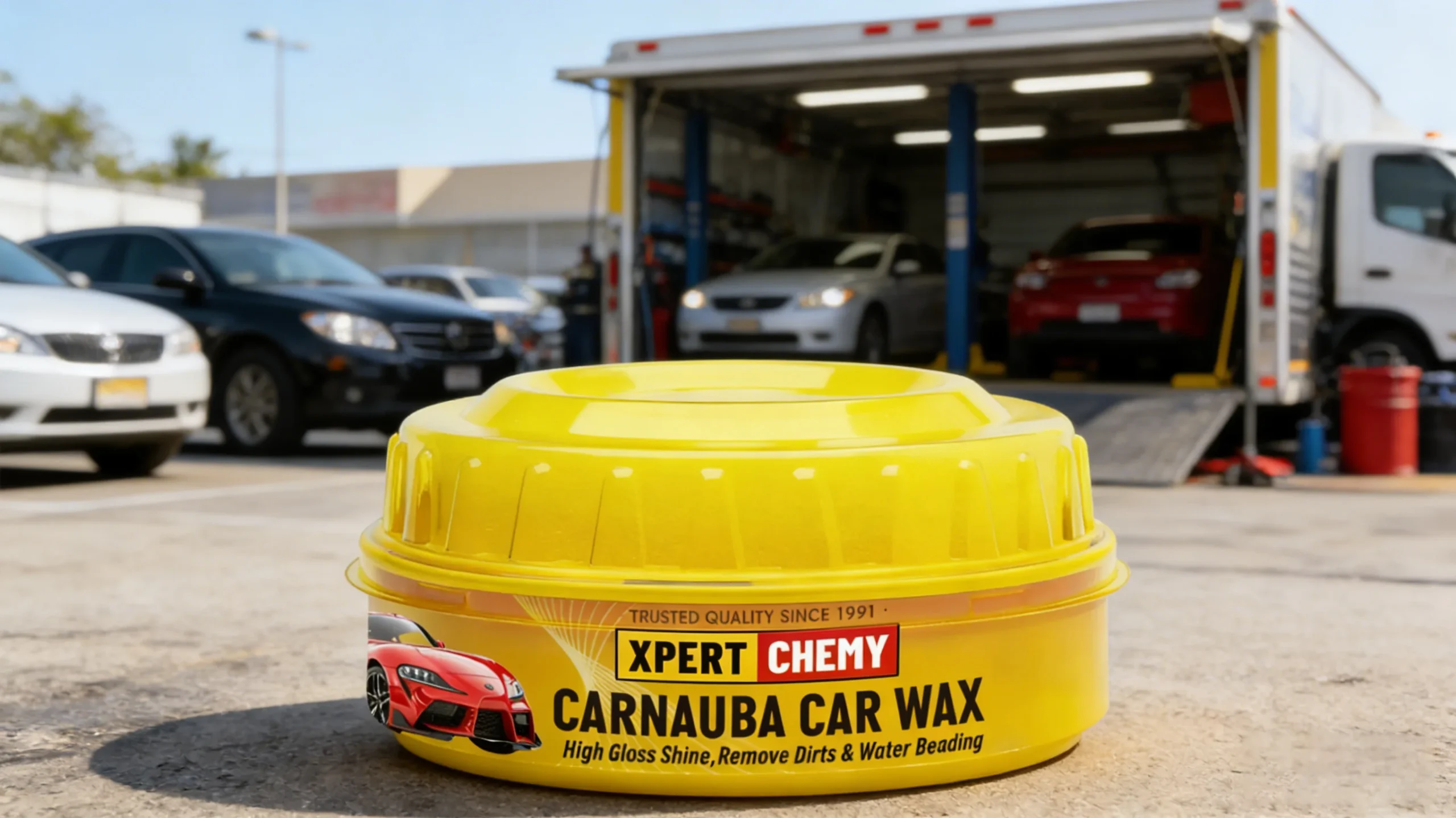
For businesses sourcing premium wax lines, XPERTCHEMY? Carnauba Car Wax Paste 300ml is available through stable wholesale supply for distributors and detailing channels. We also support OEM/ODM customization, including private label packaging and formula tuning for your target market.
Internal resources: XPERTCHEMY? Carnauba Car Wax Paste 300ml, and XPERTCHEMY Blog.