
In industrial environments where vibration, thermal cycling, and dynamic loads are common, threaded fastener reliability is critical. ASTM D5363 is a widely recognized test standard used to evaluate the performance of anaerobic threadlockers, helping engineers and procurement teams verify whether a product can deliver consistent locking strength under controlled conditions.
This article explains what ASTM D5363 compliance means, outlines key technical specifications, and discusses how compliant threadlockers are used in demanding industrial applications.
What Is ASTM D5363?
ASTM D5363 is a standardized test method that measures the prevailing torque and breakaway torque of anaerobic adhesives applied to threaded fasteners. The test focuses on assessing the ability of a threadlocker to resist loosening after full cure, particularly in environments subject to vibration or mechanical stress.
While ASTM D5363 does not certify a product, compliance indicates that the threadlocker has been tested using repeatable, industry-accepted procedures, allowing meaningful performance comparisons between products.
Key Technical Specifications Evaluated
Threadlockers tested under ASTM D5363 are typically evaluated across several core performance parameters:
1. Breakaway Torque
Breakaway torque measures the force required to initiate fastener movement after curing. Higher values indicate stronger resistance to loosening, which is essential for permanent or semi-permanent assemblies.
2. Prevailing Torque
Prevailing torque reflects the rotational resistance during fastener removal after breakaway. This parameter is important for understanding how the adhesive maintains holding power throughout disassembly.
3. Cure Time and Handling Strength
Although ASTM D5363 focuses on torque performance, compliant products are usually characterized by:
-
Fixture time (initial holding strength)
-
Full cure time (maximum mechanical performance)
These values affect production throughput and maintenance scheduling.
4. Temperature Resistance
Industrial-grade threadlockers are often specified with operating temperature ranges, commonly from –55°C to +150°C or higher, depending on formulation. Thermal stability is critical for motors, gearboxes, and heavy machinery.
5. Chemical Compatibility
Threadlockers used in industrial settings must resist degradation from oils, fuels, coolants, and cleaning agents. Chemical resistance ensures long-term joint integrity.
Typical Industrial Applications
ASTM D5363 compliant threadlockers are widely used in:
-
Electric motors and rotating equipment
-
Pumps, compressors, and gear assemblies
-
Automotive and off-road machinery
-
Industrial robotics and automation systems
-
Heavy equipment exposed to continuous vibration
In these applications, permanent-strength threadlockers help eliminate the need for mechanical locking devices such as lock washers or double nuts.
Material and Fastener Considerations
Performance can vary depending on:
-
Fastener material (carbon steel, stainless steel, plated surfaces)
-
Thread size and engagement length
-
Surface cleanliness and preparation
For inactive metals or large-diameter fasteners, the use of an activator may be recommended to ensure proper cure and consistent torque values.
Selecting the Right Permanent Threadlocker
When choosing a permanent-strength threadlocker, engineers should review:
-
Published ASTM D5363 test data
-
Torque ranges appropriate for the fastener size
-
Environmental exposure conditions
-
Required disassembly method (heat or mechanical force)
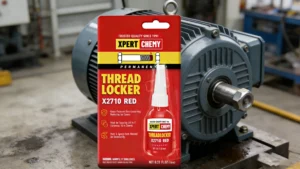
Products such as XPERTCHEMY® Threadlocker Permanent are formulated to meet demanding industrial requirements and are tested in accordance with ASTM D5363 to provide reliable, high-strength locking performance in critical assemblies.
Conclusion
ASTM D5363 compliance provides a standardized benchmark for evaluating the performance of anaerobic threadlockers in industrial applications. By understanding key torque measurements, cure characteristics, and environmental resistance, manufacturers and maintenance professionals can select threadlockers that ensure long-term fastener security, reduced downtime, and improved equipment reliability.