
Loose screws and fasteners are a common cause of mechanical failure, vibration noise, and structural instability across industries—from automotive and machinery maintenance to DIY assembly and electronics. Threadlocking adhesives offer a reliable solution, but their effectiveness depends on correct usage. This guide explains how to prevent screws from loosening by optimizing adhesive application, understanding curing time, and using proper removal techniques.
Why Screws Loosen Over Time
Screws can gradually loosen due to several factors:
-
Vibration and shock during operation
-
Thermal expansion and contraction
-
Insufficient tightening torque
-
Repeated load cycles
Threadlockers fill the gaps between mating threads, creating a solid bond that resists vibration and prevents self-loosening.
Correct Threadlocker Application Amount
Applying the right amount of threadlocker is critical for performance.
Recommended Application Guidelines
-
Small screws (M2–M6): Apply a single drop to the leading threads
-
Medium screws (M8–M12): Apply 2–3 drops around the threads
-
Large fasteners: Apply adhesive along the circumference of the male thread
Avoid over-application, as excess adhesive can:
-
Interfere with proper tightening
-
Increase cleanup difficulty
-
Extend curing time unnecessarily
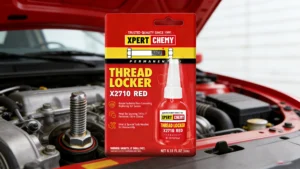
For high-vibration or permanent assemblies, a high-strength product like XPERTCHEMY® Threadlocker Permanent provides maximum holding power while maintaining clean, controlled flow during application.
Understanding Curing Time
Threadlockers cure anaerobically—meaning they harden in the absence of air once confined between metal threads.
Typical Curing Stages
-
Initial fixture time: 10–30 minutes
-
Functional strength: 1–3 hours
-
Full cure: 12–24 hours
Environmental factors such as temperature, surface cleanliness, and material type can affect curing speed. For best results, avoid applying load or torque before full cure is achieved.
High-performance formulations like XPERTCHEMY® Threadlocker Permanent are engineered to reach reliable holding strength quickly while delivering long-term resistance to vibration and thermal cycling.
Proper Methods for Screw Removal
Even permanently bonded screws can be removed with the right technique.
Removal Techniques
-
Heat application (150–250°C / 300–480°F): Softens high-strength threadlockers
-
Correct tools: Use properly sized hex keys or torque tools to prevent stripping
-
Steady torque: Apply slow, consistent force rather than sudden impacts
If disassembly is expected in the future, consider whether a medium-strength threadlocker is more suitable for the application.
Best Practices for Long-Term Fastener Security
-
Clean threads with degreaser before application
-
Use the correct strength grade for the job
-
Allow full curing time before use
-
Store threadlocker in a cool, dry place
When permanent locking is required—such as in motors, gearboxes, or structural assemblies—XPERTCHEMY® Threadlocker Permanent offers a dependable solution trusted by professionals for critical fastening applications.
Conclusion
Preventing screw loosening is not just about applying adhesive—it’s about using the correct amount, allowing proper curing, and understanding safe removal methods. With the right approach and a high-quality threadlocker, you can significantly improve reliability, safety, and service life across your assemblies.