
Few things detract from a vehicle’s appearance quite like cloudy, yellowed headlights. What was once a crystal-clear beam of light becomes a dull, foggy glow that not only looks unsightly but can also compromise nighttime visibility. Understanding why this happens is the first step toward prevention and restoration. The cloudiness that affects plastic headlight covers is not merely a cosmetic issue—it’s a complex chemical process driven by environmental factors and material science.
The Primary Culprit: UV Radiation and Oxidation
The main reason car headlights turn cloudy is due to UV radiation from the sun, which accelerates plastic oxidation and causes them to yellow and haze. 1 Modern vehicles predominantly use polycarbonate plastic for their headlight lenses because of its strength and impact resistance, but this material has a significant weakness: it’s highly susceptible to UV damage. 2 When these plastic lenses are continuously exposed to sunlight, the ultraviolet rays begin breaking down the molecular structure of the plastic.
This degradation process is known as oxidation, and it fundamentally alters the surface properties of the headlight lens. The oxidation process roughens the plastic surface, scattering light instead of allowing it to pass through cleanly, resulting in that characteristic dull, foggy glow that drivers dread. 6 What’s particularly problematic is that this isn’t just a surface-level issue—it represents a deep chemical change in the material itself.
The Protective Coating Breakdown
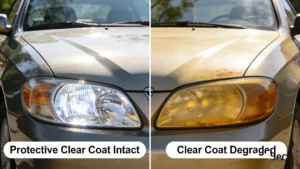
Most people don’t realize that new headlights come with a protective coating designed to shield the underlying plastic from environmental damage. However, over time this protective coating fails, exposing the underlying plastic to UV radiation and causing it to degrade, turning cloudy and yellow. 4 This clearcoat layer is essentially the headlight’s first line of defense, and when it breaks down due to constant exposure to the elements, the real damage begins.
Cloudy or foggy headlights are primarily caused by the breakdown of this protective coating (or clearcoat) on the plastic lenses due to prolonged exposure to harsh conditions. 7 The failure isn’t sudden—it’s a gradual process that accelerates with time and environmental stress. Once the coating begins to deteriorate, the degradation process speeds up dramatically.
Environmental Factors That Accelerate Cloudiness
While UV radiation is the primary offender, it’s not acting alone. Constant exposure to various environmental factors significantly contributes to headlight cloudiness. 3 These factors include:
Harsh weather conditions: Rain, snow, ice, and temperature fluctuations all stress the plastic and its protective coating
Road grime and debris: Small particles constantly bombard the headlight surface, creating micro-abrasions that compromise the protective layer
Chemical exposure: Car wash chemicals, especially harsh detergents, can accelerate the breakdown of the protective coating 9
Atmospheric pollutants: Acid rain, industrial pollutants, and even tree sap can eat away at the headlight’s surface
The ultraviolet light from the sun attacks the surface of the plastic and causes it to develop little pock marks and checks, creating a rough, uneven surface that scatters light rather than focusing it. 8 This microscopic damage might not be visible to the naked eye initially, but over time it accumulates to create the familiar cloudy appearance.
The Science Behind the Cloudiness
What makes cloudiness particularly problematic is how it affects light transmission. A pristine headlight lens acts like a lens should—focusing and directing light efficiently. However, when the surface becomes oxidized and pitted, it no longer has the smooth optical properties necessary for proper light transmission.
Instead of passing through cleanly, light rays scatter in multiple directions when they hit the roughened surface. This scattering effect reduces the intensity and focus of the headlight beam, potentially compromising nighttime visibility and safety. The yellowing that often accompanies cloudiness further reduces light output by filtering out the blue spectrum of light, which is essential for clear nighttime vision.
Prevention and Restoration
While the cloudiness process is inevitable to some degree, understanding its causes can help drivers take preventive measures. Parking in shaded areas, using UV-protective headlight covers, and applying specialized protective coatings can significantly extend the life of headlight lenses.
For headlights that have already succumbed to cloudiness, restoration is possible through various methods ranging from DIY kits to professional services. These typically involve removing the oxidized layer through polishing and then applying a new protective coating to prevent future damage.
Conclusion
The cloudiness that affects plastic headlight covers is a complex phenomenon driven primarily by UV radiation, oxidation, and the breakdown of protective coatings. It’s not merely a cosmetic issue but a genuine safety concern that affects nighttime visibility. By understanding the science behind this common problem, vehicle owners can take proactive steps to protect their headlights and maintain optimal visibility on the road.
The battle against cloudy headlights is ongoing, but with proper knowledge and maintenance, drivers can keep their vehicles looking newer longer while ensuring maximum safety during nighttime driving. Remember that prevention is always more cost-effective than restoration, and regular maintenance can significantly extend the life of your vehicle’s lighting system.